Trump's Military Strikes on Drug Smuggling Boats: A Necessary War or Constitutional Overreach?
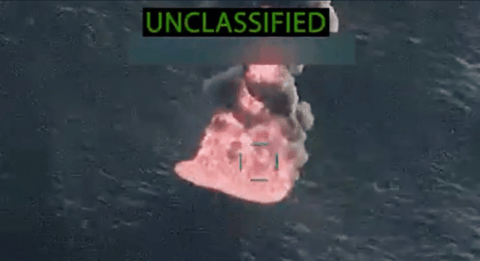
Since early September 2025, President Trump has fundamentally transformed America's approach to combating drug trafficking in the Caribbean. Rather than relying on traditional Coast Guard interdiction methods, the administration has authorized 14 military strikes against suspected drug-smuggling vessels off the coasts of Venezuela and Colombia, resulting in 57 confirmed deaths.
The policy has ignited fierce debate across the political spectrum. Conservative Senator Rand Paul has condemned the strikes as "extrajudicial killings," while the United Nations and international law experts claim they violate maritime conventions. Meanwhile, Defense Secretary Pete Hegseth defends the operations as justified military action against cartels waging war on American soil.
At the center of this controversy lies a devastating reality: 73,690 Americans died from drug overdoses in the 12 months ending April 2025, according to CDC data. The question driving Trump's strategy is simple but uncomfortable: When traditional law enforcement fails to stop the flow of deadly narcotics, does the President have the authority—and the moral obligation—to use lethal military force?
The Drug Crisis Driving Trump's Strategy
The scale of America's overdose epidemic provides essential context for understanding Trump's aggressive approach. CDC data reveals that 73,690 Americans died from drug overdoses in the 12-month period ending April 2025—a death toll that exceeds U.S. combat casualties in the Vietnam War.
Traditional Coast Guard interdiction efforts have proven largely ineffective. According to maritime security experts, the Coast Guard intercepts between 7% and 15% of cocaine flowing through maritime zones to the United States. This means 85% to 93% of drugs successfully reach American shores despite decades of enforcement efforts.
The conventional approach involves a multi-step process: detecting suspicious vessels, pursuing them with Coast Guard cutters, firing warning shots, boarding, searching, arresting suspects, and prosecuting in federal courts. While this method respects due process, it has failed to significantly reduce drug flow or prevent tens of thousands of annual deaths.
Trump's strategy represents a fundamental departure from this model. Since September 2nd, the administration has conducted 14 military strikes, with operations expanding from the Caribbean to the Eastern Pacific. Just this week, four boats were struck in a single day, killing 14 people. One survivor was rescued by the Mexican Navy.
The strikes occur in international waters without warning, boarding, or arrests—only missiles.
How the Strikes Operate
The first strike on September 1st set the template for subsequent operations. Trump himself posted black-and-white footage on Truth Social showing a speedboat racing across open water at approximately 45-50 miles per hour. A missile strikes from above, and within seconds the vessel erupts in flames and sinks. Eleven people died in that attack.
According to Trump's statement, the targets were members of Tren de Aragua, a Venezuelan gang he has formally designated as a foreign terrorist organization. His message accompanying the video was explicit: "Please let this serve as notice to anybody even thinking about bringing drugs into the United States of America."
The operational pattern has remained consistent. Defense Secretary Pete Hegseth regularly posts strike videos on social media platform X, framing the operations within a broader war framework: "Just as Al-Qaeda waged war on our homeland, these cartels are waging war on our border and our people. There will be no refuge or forgiveness, only justice."
The administration's policy is straightforward: detect the vessel, confirm intelligence, authorize the strike, execute. No negotiations, no warnings, no prisoners.
The Constitutional Conservative Critique: Rand Paul's Concerns
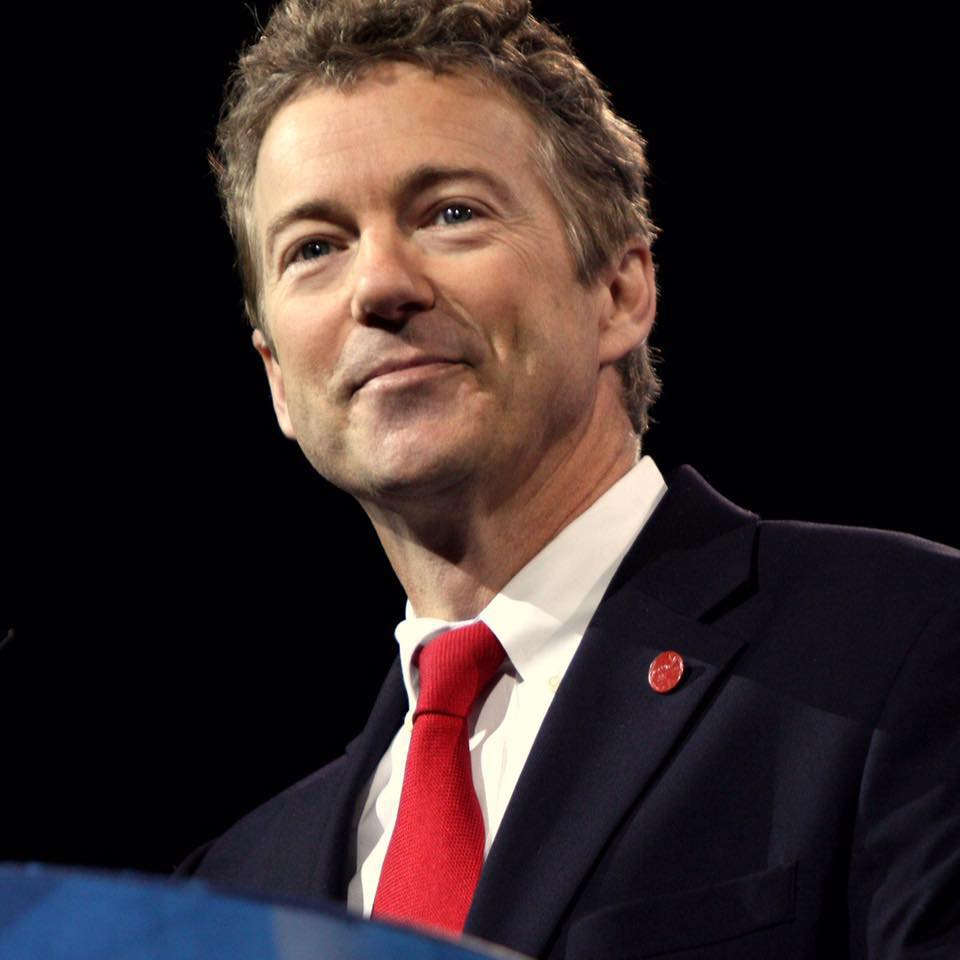
Senator Rand Paul has emerged as the most prominent Republican critic of the strikes, raising constitutional questions that deserve serious consideration. In his appearance on Meet the Press, Paul highlighted a concerning statistic: Coast Guard data from fiscal year 2024 shows that when boarding suspected drug vessels, authorities find contraband only 73% of the time—meaning 27% of boardings result in no drug discovery.
Paul's argument centers on proportionality and due process. "About 25% of the time the Coast Guard boards a ship, there are no drugs," he explained. "So if our policy now is to blow up every ship we suspect, that would be a bizarre world in which 25% of the people might be innocent."
The senator's concerns reflect a fundamental tension in conservative philosophy: the commitment to limited government power versus the imperative to protect American lives from foreign threats.
However, this critique may not fully account for differences between routine Coast Guard operations and targeted military strikes. The 27% false-positive rate Paul cites comes from 125 vessel boardings in FY2024, which included random suspicious vessel stops—boats that appeared questionable but turned out to be legitimate fishing vessels.
Presidential military strike authorization operates under different protocols. Trump's strikes rely on intelligence from the Joint Interagency Task Force South (JIATF South), which coordinates detection across multiple agencies and allied nations, DEA databases, satellite surveillance, and pattern analysis of known trafficking routes. Defense Secretary Hegseth has emphasized that "people with fingers on the trigger may demand a much higher certainty rate before shooting."
The question becomes: Does military intelligence targeting produce a significantly lower error rate than routine Coast Guard interdiction? The administration has not released data to answer this question definitively.
Why Traditional Interdiction Methods Have Failed
A recent case illustrates the limitations of conventional enforcement. On October 16th, a U.S. military strike targeted a semi-submersible vessel. Two survivors were rescued and repatriated to Ecuador and Colombia. Both governments released their respective nationals within hours without filing charges.
This pattern reveals a critical flaw in the traditional law enforcement model: without physical evidence from a sunken vessel and without clear jurisdictional authority, foreign governments often decline to prosecute. The suspects weren't innocent fishermen mistakenly targeted—U.S. military intelligence deemed them legitimate threats worth striking—but the lack of recovered contraband made prosecution impossible.
The conventional Coast Guard model follows a deliberate sequence designed for domestic criminal justice: detect, pursue, warn, disable, board, search, arrest, and prosecute in federal court. This framework assumes suspects will respect the legal process and that cooperating governments will hold defendants accountable.
Modern drug cartels, however, operate as transnational paramilitary organizations with military-grade weapons, encrypted communications networks, and sophisticated operations spanning multiple countries. When crew members are arrested, replacements are deployed within 24 hours. The organizations themselves remain intact.
After decades of this approach yielding a 7-15% interdiction rate while overdose deaths have soared, the Trump administration has concluded that treating cartels as criminals rather than military adversaries has fundamentally failed.
The International Law Controversy
Legal scholars, UN human rights experts, and international law professors have raised substantial concerns about the strikes' legality under maritime and humanitarian law. Their arguments rest on several foundations:
Jurisdictional Questions: The strikes occur in international waters against vessels not currently attacking the United States. Critics argue this violates the UN Convention on the Law of the Sea and international maritime law, which generally prohibit using lethal force against civilian vessels without imminent threat.
Due Process Violations: Without boarding, verification of contraband, or any form of judicial process, the strikes constitute what many legal experts call "extrajudicial executions." Some analysts have drawn comparisons to Obama-era drone strikes, particularly "signature strikes" that targeted individuals based on behavior patterns rather than confirmed identities.
Lack of Declared War: The United States has not formally declared war against Venezuela, Colombia, or any drug cartel, raising questions about the constitutional and international legal basis for using military force.
The Trump administration's legal framework relies on a notification sent to Congress on October 1st declaring a "non-international armed conflict with unlawful combatants"—specifically, drug cartels operating in the Caribbean. This designation mirrors the legal justification used in counterterrorism operations.
Under the laws of armed conflict, military forces can lawfully engage enemy combatants even when those fighters pose no immediate threat. The administration argues that cartels flooding America with fentanyl constitute a form of chemical warfare that justifies military response.
Whether this legal theory withstands scrutiny may ultimately depend on whether courts accept the premise that drug trafficking constitutes armed conflict. The administration has provided seven classified briefings to Congress, but Democratic Senator Mark Kelly reported that officials "could not give us a logical explanation on how this is legal and were tying themselves in knots."
The legal debate may be academic, however. Trump has shown no indication he intends to modify the policy based on international law concerns, and most congressional Republicans support the strikes as necessary measures to protect American lives.
Trump's Uncompromising Stance
When reporters questioned President Trump about seeking congressional authorization for a formal declaration of war, his response was characteristically blunt: "I don't think we're going to necessarily ask for a declaration of war. I think we're just going to kill people that are bringing drugs into our country, okay? We're going to kill them. They are going to be like dead."
Trump has indicated he would likely seek congressional approval if operations expand to include land-based targets—striking cartel facilities within Venezuelan or Colombian territory. Such escalation has been hinted at for weeks and would represent a dramatic expansion of military involvement.
Vice President J.D. Vance has adopted an equally defiant posture. When accused of war crimes on social media, Vance responded: "I don't give a [expletive] what you call it."
This rhetorical strategy reflects the administration's calculation that American voters prioritize stopping drug deaths over satisfying international legal standards or constitutional procedural norms. Public polling on the strikes has not yet been released, making it difficult to assess whether this calculation is accurate.
The Venezuela Dimension: Regime Change or Drug War?
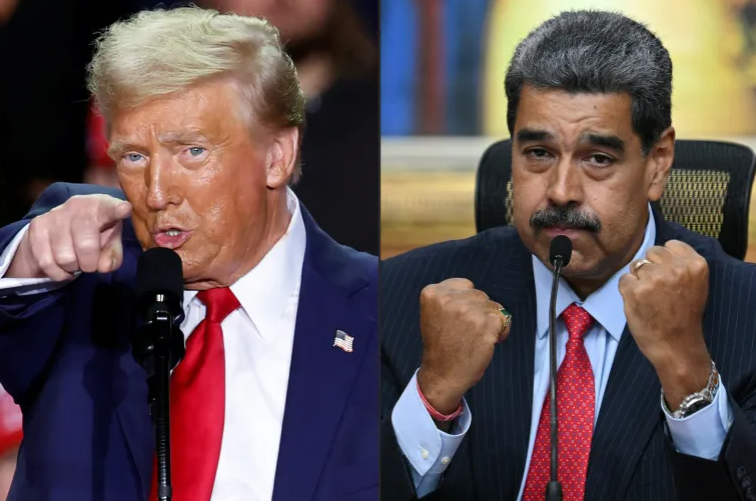
Venezuela's role in this operation raises questions about whether the strikes serve multiple strategic objectives beyond drug interdiction. Nicolás Maduro's authoritarian government has maintained power through rigged elections, economic mismanagement that created widespread poverty, and strategic partnerships with China, Russia, and Iran. The United States maintains a $50 million bounty on Maduro for drug trafficking charges.
The military deployment accompanying these strikes suggests broader ambitions. The USS Gerald R. Ford carrier strike group—including a full aircraft carrier, multiple destroyers, and a complete air wing—has been positioned in the Caribbean. This represents overwhelming force if the mission is simply destroying small drug-trafficking vessels.
One former Obama administration official characterized the deployment as "unprecedented overkill if all we're trying to do is attack a couple small boats." The assessment raises the possibility that Trump may be laying groundwork for regime change operations against Maduro.
Whether this represents mission creep or strategic planning depends on one's perspective. If the strikes successfully disrupt cartel operations while simultaneously positioning U.S. forces to support Venezuelan opposition movements, the administration could achieve dual objectives. However, expanding operations into Venezuelan territory without congressional authorization would escalate constitutional and international law concerns significantly.
Maduro has allowed cartels to operate from Venezuelan territory with minimal interference, effectively making Venezuela a narco-state. From Trump's perspective, removing a socialist dictator who enables drug trafficking that kills Americans may represent an opportunity for strategic success on multiple fronts.
The Evidence Gap
A significant weakness in the administration's case is the lack of publicly released evidence confirming that struck vessels were actually transporting drugs or that casualties were cartel members rather than civilians.
After the second strike in September, Trump claimed: "We have proof. All you have to do is look at the cargo. It's splattered all over the ocean. Big bags of cocaine and fentanyl all over the place." However, no photographic evidence, drug samples, or vessel manifests have been made public.
Bodies from the first strike washed ashore in Trinidad and Tobago displaying injuries consistent with explosion. Families in Colombia and Trinidad have claimed their relatives were legitimate fishermen, not drug traffickers. Colombian President Gustavo Petro has accused the United States of murder and demanded accountability for the deaths of Colombian nationals.
Trump responded to these accusations by threatening to reduce U.S. foreign aid to Colombia—a response that avoided addressing the evidence questions directly.
Transparency would strengthen the administration's position significantly. If intelligence agencies possess proof that struck vessels were carrying contraband, releasing that evidence would undermine critics' claims about potential innocents being killed. It would also provide political cover for Republican lawmakers facing pressure from constituents concerned about due process.
The administration may be withholding evidence to protect intelligence sources and methods, or because revealing targeting criteria could help cartels evade detection. However, without some form of public accountability, the policy rests entirely on public trust in executive branch judgment—a trust that may erode if questions about civilian casualties persist.
The Case for Military Action Against Cartels
The Trump administration's strikes represent a fundamental rethinking of how America responds to drug trafficking. For decades, the United States has treated cartels as criminal organizations subject to law enforcement protocols. This approach has achieved an interdiction rate between 7% and 15%—a failure by any reasonable metric.
Cartels have evolved into transnational paramilitary forces that have killed more Americans than Al-Qaeda through the distribution of fentanyl and other deadly narcotics. The 73,690 overdose deaths in a single 12-month period exceed total U.S. combat deaths in the Vietnam War. By any traditional definition, this constitutes a national security threat warranting military response.
The constitutional and international law concerns raised by Senator Paul and legal scholars deserve serious consideration. Killing individuals without judicial process conflicts with fundamental American values around due process. Conducting military strikes in international waters without formal declarations of war pushes the boundaries of executive authority.
However, these concerns must be weighed against the reality that traditional approaches have catastrophically failed. When arrested smugglers are released within hours by foreign governments, when 85-93% of drugs successfully reach American shores, and when tens of thousands of Americans die annually—at what point does adherence to failed procedures become itself a form of moral failure?
Trump's approach demands that cartels face military consequences for actions that constitute acts of war against the American people. The message is unambiguous: bringing drugs to America will result in death, not arrest and release.
Whether this policy proves effective in reducing drug flow remains to be seen. Whether it withstands constitutional and legal challenges is uncertain. But it represents the first time in decades that an administration has treated the scale of cartel operations as warranting military rather than law enforcement response.
For Americans who have lost family members to overdoses, for communities destroyed by addiction, and for those who believe that protecting American lives justifies extraordinary measures, Trump's strikes may represent overdue action against an enemy that has killed with impunity for too long.
What Happens Next
The strikes send an unmistakable message to cartel organizations: operating drug-smuggling vessels in waters approaching the United States now carries lethal consequences without warning or opportunity for surrender. Whether this deterrent proves effective will become clear in coming months as data emerges on interdiction rates and drug flow patterns.
The policy faces multiple potential obstacles. Congressional Democrats may attempt to restrict funding or authority for the operations. International pressure from Latin American governments and human rights organizations will likely intensify. Legal challenges could reach federal courts, forcing judicial review of the administration's "armed conflict" legal framework.
Most significantly, if civilian casualties mount without corresponding evidence of cartel membership, public support could erode—even among conservatives who initially supported aggressive action against drug traffickers.
The administration appears prepared to weather these challenges. Trump has consistently prioritized results over process, and polling suggests his base values decisive action against threats to American lives. The question is whether 14 strikes and 57 deaths will translate into measurable reductions in drug overdoses—the ultimate metric by which this policy will be judged.
For now, the message to cartels is clear: the United States has redefined drug trafficking as an act of war justifying military response. Whether that redefinition represents necessary evolution in counternarcotics strategy or dangerous expansion of executive power may depend on which Americans you ask—and whether they've personally lost someone to the overdose epidemic.
Key Takeaways: Trump's Military Strikes on Drug Boats
- 14 military strikes have been conducted since September 2nd, resulting in 57 confirmed deaths
- Operations have expanded from Caribbean waters to the Eastern Pacific
- Traditional Coast Guard interdiction catches only 7-15% of drugs, allowing 85-93% to reach American shores
- 73,690 Americans died from drug overdoses in the 12 months ending April 2025
- Senator Rand Paul opposes the strikes, citing Coast Guard data showing 27% false positive rates on vessel boardings
- The administration claims higher certainty thresholds for military strikes using JIATF South intelligence
- Foreign governments have released arrested smugglers within hours, demonstrating failures of traditional law enforcement
- Legal experts question the strikes under international maritime law and due process protections
- Trump invoked "non-international armed conflict with unlawful combatants" as legal justification
- The USS Gerald R. Ford carrier strike group deployment suggests possible broader objectives beyond drug interdiction
- No public evidence has been released confirming struck vessels carried drugs or that casualties were cartel members
- Colombian President Petro accuses the U.S. of murdering Colombian nationals
- Trump has threatened to expand strikes to land-based cartel facilities in Venezuela or Colombia
The policy represents the most aggressive U.S. military response to drug trafficking in modern history, raising fundamental questions about executive authority, international law, and whether protecting American lives from overdose deaths justifies lethal force without judicial process.
This analysis is based on the October 30, 2025 episode of O'Connor's Right Stand. For more conservative commentary and deep dives on the issues that matter, visit OConnorsRightStand.com. Follow on X: @OConnorPodcasts.
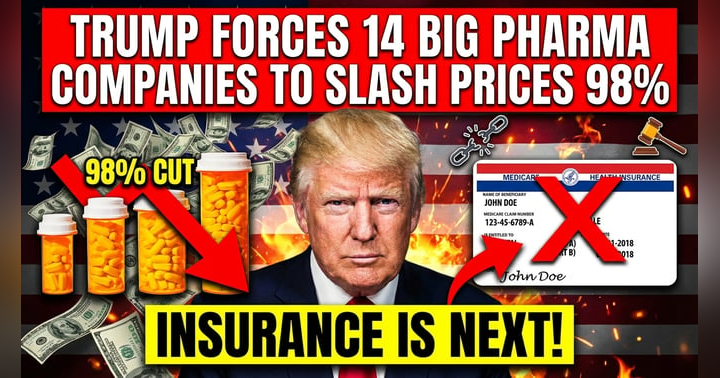
Trump's Historic Pharmaceutical Victory: 14 Companies Slash Drug Prices While Insurance Giants Face Reckoning