Trump's Historic Pharmaceutical Victory: 14 Companies Slash Drug Prices While Insurance Giants Face Reckoning
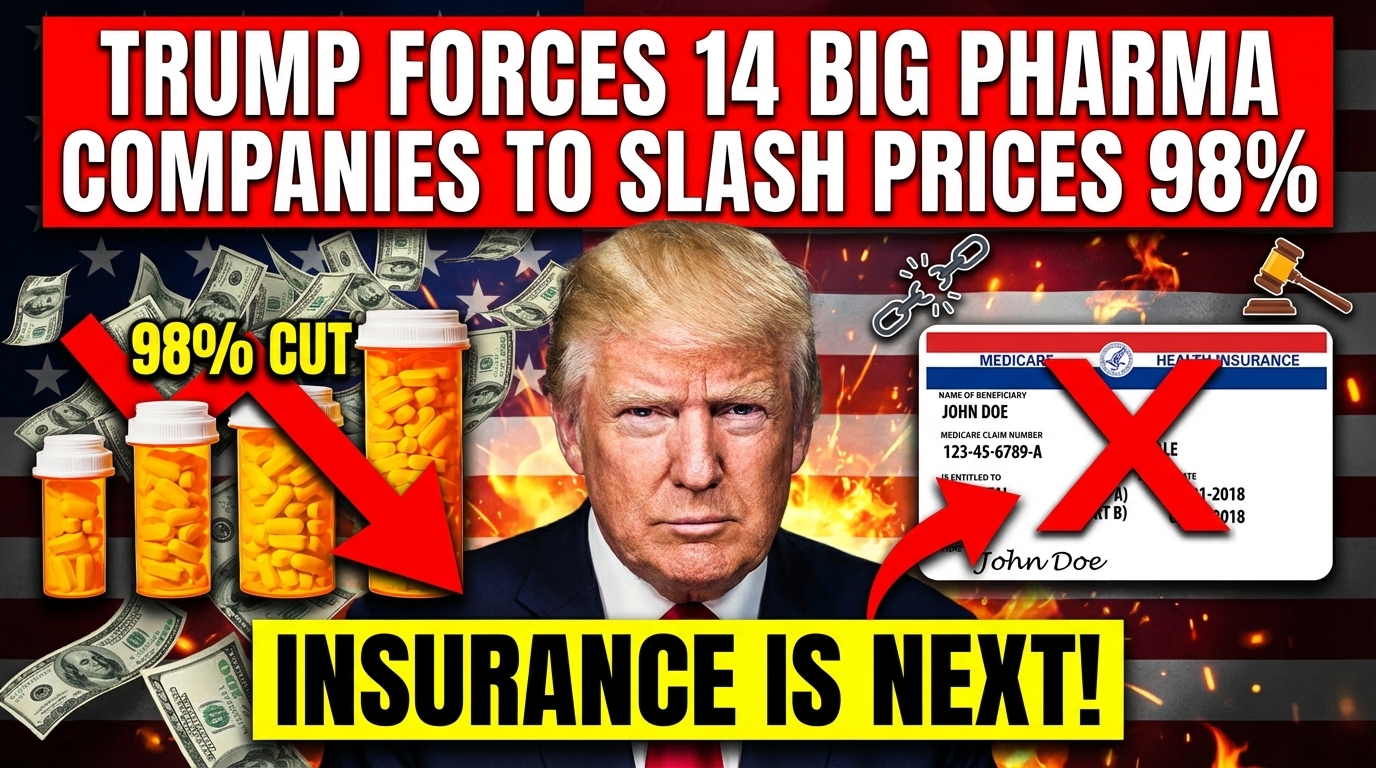
What Obama, Biden, and Bernie Sanders promised for 40 years—Trump delivered in six months
For decades, American families have faced an impossible choice: pay for lifesaving medications or pay for groceries. While politicians from both parties promised to fix the broken pharmaceutical system, drug prices continued climbing year after year. Americans subsidized the entire world's prescription drug development while paying three to four times more than any other country for the exact same medications.
That era just ended.
President Trump has accomplished what establishment politicians claimed was impossible—forcing Big Pharma to slash prices, launching a government website where Americans can buy medications at the world's lowest prices, and preparing to take on the health insurance industry next. This represents the most significant healthcare affordability victory in American history, and mainstream media is doing everything possible to bury the story.
The Crisis Nobody Fixed Until Now
Americans have been getting robbed for generations. A 2024 Rand Corporation study confirmed what families already knew: U.S. prescription drug prices are three times higher than overseas. For brand-name medications—the ones people actually depend on to stay alive—prices are four times higher than what Europeans pay.
The same drug, manufactured in the same facility, shipped from the same warehouse, costs Canadians $100 and Americans $400. This isn't market forces at work—it's systematic exploitation enabled by corrupted politicians who took pharmaceutical campaign donations while Americans rationed insulin.
The reason for this massive price disparity? America remains the only developed nation where the federal government is legally prohibited from negotiating drug prices. European governments tell pharmaceutical companies what they'll pay, and companies accept those terms. But in America, the pharmaceutical lobby wrote laws preventing Medicare from negotiating, allowing insurance companies to pass unlimited costs to consumers, and forcing American patients to subsidize global drug development.
Robert F. Kennedy Jr., Trump's Secretary of Health and Human Services, explained the scam perfectly: "We were paying for all of the innovation in this country, and yet the rest of the world was free riding on it." Americans funded the research, Americans paid for the clinical trials, Americans absorbed the development costs—and Europeans bought the finished products for pennies on the dollar.
Pharmaceutical companies claimed this exploitation was necessary for innovation. They warned that lowering American prices would stop medical advancement and cost lives. That argument is garbage. These same companies spend more money on advertising than research—billions convincing Americans to ask their doctors about medications they don't need. They spend billions more lobbying Congress and buying off politicians. They spend billions on executive bonuses and stock buybacks.
Meanwhile, American families bankrupted themselves paying for blood thinners, diabetics skipped insulin doses, and seniors chose between medications and food. The establishment knew about this crisis, talked about it constantly, and did absolutely nothing.
Forty Years of Broken Promises
Barack Obama campaigned on lowering drug prices, then passed the Affordable Care Act—written by insurance and pharmaceutical lobbyists—and prices increased. Joe Biden spent four years accepting pharmaceutical donations and accomplished nothing while prices climbed higher. Bernie Sanders screamed about prescription drug costs for 25 years, made it his signature issue, and the number of medications he actually made more affordable totals exactly zero.
Democrats controlled the White House and both chambers of Congress multiple times over four decades. They had every opportunity to fix this crisis. They chose not to, because the pharmaceutical industry owns them.
Trump proved the solution was never complicated—it just required a president who wasn't bought and paid for.
Phase One: Taking Down Big Pharma
On May 12th, 2025, President Trump signed an executive order implementing Most Favored Nation pricing for prescription drugs. The concept is straightforward: whatever the lowest price for any medication is anywhere in the developed world, that becomes the price Americans pay. If Germany pays $20 for a medication and America pays $200, Americans now pay $20. Period.
The pharmaceutical industry immediately lost their minds. Their lobbying group, PhRMA, called it "foreign-first pricing" and warned it would "jeopardize investment in America." Translation: they couldn't exploit American patients anymore and they were furious about it.
Trump ignored them completely.
On July 31st, he sent letters to the CEOs of the world's 17 largest pharmaceutical companies. The message was direct: "Brand name drug prices in the United States are up to three times higher on average than anywhere else for the same identical medicines. This unacceptable burden on hardworking American families ends with my administration."
Trump gave them a deadline—September 29th, 2025—to agree to three conditions: lower prices through Most Favored Nation standards, invest in American manufacturing, and sell medications on a new government website at massive discounts. The alternative? Face tariffs that would destroy their profit margins.
They caved.
Pfizer signed the first deal on September 13th, agreeing to sell medications to Medicaid at the world's lowest prices, offer deep discounts through TrumpRx.gov, and commit $70 billion to U.S. manufacturing. In exchange, Trump exempted them from pharmaceutical tariffs for three years.
AstraZeneca followed on October 10th. EMD Serono signed on October 16th. Eli Lilly and Novo Nordisk—the companies manufacturing Ozempic, Wegovy, and Zepbound—came next on November 6th. Those weight loss medications, which previously cost over $1,000 monthly, now cost $350 through TrumpRx.gov and just $50 for Medicare patients.
Then came the December 9th announcement that shook the pharmaceutical industry to its core. Nine more companies signed in a single day: Amgen, Bristol-Myers Squibb, Boehringer Ingelheim, Genentech, Gilead Sciences, GSK, Merck, Novartis, and Sanofi.
That's 14 of the world's 17 largest pharmaceutical companies—signed, committed, locked in.
The Numbers That Change Everything
The price reductions Trump secured aren't marginal adjustments—they're transformational decreases that will save American families thousands of dollars annually.
Sanofi cut its blood thinner from $750 to less than $16—a 98% reduction. Elderly Americans dependent on blood thinners just saw their annual costs drop from $9,000 to under $200.
Amgen reduced its cholesterol medication Repatha from $573 to $239. Bristol-Myers Squibb slashed its HIV treatment Reyataz from $1,449 to $270—an 85% decrease that makes HIV treatment accessible for thousands who were previously priced out.
Boehringer Ingelheim cut its diabetes medication from $525 to $55. Diabetics managing their condition with this drug just saved over $5,600 annually.
Genentech reduced its flu medication from $168 to $50. Gilead Sciences dropped its hepatitis C treatment from $24,920 to $2,425—a tenfold price cut that means people with hepatitis C can now afford their cure instead of living with a chronic illness.
GSK reduced its asthma inhaler from $265 to $89. Merck cut its diabetes drug from $330 to $100.
These aren't abstract policy victories—they're real savings for real Americans. Families with diabetic children no longer ration insulin. Seniors on blood thinners can afford their medications without choosing between prescriptions and groceries. People living with HIV can access treatment that keeps them alive.
Every company that signed also agreed that any new drug they develop must be sold at Most Favored Nation prices from launch. This doesn't just address existing medications—it locks in lower prices permanently for future treatments.
Additionally, these 14 companies committed over $150 billion to American manufacturing and research facilities, bringing pharmaceutical jobs back to the United States while simultaneously lowering costs for patients.
How Americans Access These Lower Prices
TrumpRx.gov launches in January 2026. The website functions as a direct connection between patients and pharmaceutical manufacturers, eliminating insurance companies, pharmacy benefit managers, and every other middleman currently taking cuts from the healthcare system.
Americans visit TrumpRx.gov, search for their medication, see the manufacturer's discounted price, and purchase directly. No insurance required. No pharmacy benefit manager games. No hidden fees.
Dr. Mehmet Oz, who runs Medicare and Medicaid, explained Trump's negotiating approach: "Trump looked these pharmaceutical executives in the face and said, you've been charging Americans three times more than Europeans for the same drugs made in the same factories. That ends now."
And they agreed, because Trump gave them a choice: cooperate voluntarily or face tariffs that would cost them far more than lowering prices.
RFK Jr. noted that even his own son—described as a very liberal Democrat—told him this was the greatest healthcare achievement he'd ever witnessed. Obama promised it, Biden promised it, Bernie Sanders screamed about it for 25 years, and nobody delivered. Trump delivered in six months.
Phase Two: Insurance Companies Are Next
Trump isn't stopping with pharmaceutical companies. At the December 19th pharmaceutical announcement, he made it clear that health insurance companies are next on his list.
"I'm going to call a meeting of the insurance companies," Trump announced. "I'm going to see if they can get their price down, to put it very bluntly."
He indicated the meeting would happen either at Mar-a-Lago during the holiday break or in Washington during the first week of January when he returns to the White House. The message to insurance CEOs was unmistakable: "Insurance companies have been getting far more money than they are entitled to."
Two days later at a North Carolina rally, Trump escalated his rhetoric: "Obamacare was created to make insurance companies rich. It was bad healthcare at much too high a cost. It was never any good. It was done for the benefit of insurance companies which totally control the Democrats."
Trump's criticism of Obamacare isn't partisan hyperbole—it's documented fact. When Democrats passed the Affordable Care Act in 2010, insurance company lobbyists literally helped draft the legislation. The law mandated that every American buy insurance, creating guaranteed customers for private companies. It established federal subsidies, ensuring guaranteed payments from taxpayers. It eliminated competition, allowing insurance companies to charge whatever they wanted.
The result? Health insurance premiums have increased 80% in the 15 years since Obamacare passed. Americans pay 80% more today for health insurance than they did in 2010, and Democrats claimed this would make healthcare "affordable."
Insurance companies made trillions of dollars under Obamacare while American families watched their premiums skyrocket, their deductibles climb, and their coverage shrink.
Trump's solution mirrors his pharmaceutical strategy: cut out the middlemen and give healthcare dollars directly to American families.
He's pushing Congress to pass legislation allowing Americans to take Obamacare subsidies and deposit them into Health Savings Accounts. Instead of the federal government sending billions to insurance companies who then decide whether your treatment is "medically necessary," Americans would control their own healthcare spending.
You decide which doctor to see. You choose which treatments you need. You negotiate prices directly with healthcare providers. Not some insurance company bureaucrat who's never met you.
Republicans in Congress are already drafting bills to implement Trump's vision. Association health plans would let Americans buy insurance through retailers like Amazon, Costco, or Sam's Club, pooling millions of members together to negotiate better prices. Expanded health savings accounts would allow everyone—not just those with high-deductible plans—to save tax-free for medical expenses and use those funds for premiums, prescriptions, and alternative healthcare arrangements.
Direct-to-consumer payment legislation would redirect federal healthcare subsidies from insurance companies to individual families. Senator Rick Scott has introduced a bill ending Obamacare subsidies entirely and sending that money straight to Americans. Congressman Andy Biggs has a comprehensive healthcare framework that puts patients, not insurance companies, in control of healthcare spending.
Trump posted on Truth Social in November, writing in all caps: "THE ONLY HEALTHCARE I WILL SUPPORT OR APPROVE IS SENDING THE MONEY DIRECTLY BACK TO THE PEOPLE, WITH NOTHING GOING TO THE BIG FAT RICH INSURANCE COMPANIES."
When Trump meets with insurance company CEOs in January, he'll deliver the same ultimatum he gave pharmaceutical executives: lower your premiums, stop denying legitimate claims, stop extracting taxpayer subsidies while providing terrible coverage—or Congress will cut you out of the system completely and give Americans the money directly.
Insurance companies should be terrified, because Trump just proved he's not bluffing.
Phase Three: Making It Permanent Through Legislation
Everything Trump has accomplished through executive orders and voluntary agreements with companies represents massive progress, but executive orders can be reversed by future presidents. Voluntary agreements can be abandoned when Trump leaves office.
To make these healthcare reforms permanent, Congress must pass legislation codifying Trump's achievements into law.
House Majority Leader Steve Scalise announced that Republicans will bring multiple healthcare bills to the floor in coming weeks. These bills would expand association health plans, eliminate regulatory barriers to competition, increase price transparency requirements, and codify Most Favored Nation pricing into federal law.
The goal is straightforward: take everything Trump achieved through executive action and make it permanent legislation that even Democrats can't undo without controlling both chambers of Congress and the White House simultaneously.
Proposed legislation includes association health plan expansion, allowing millions of Americans to pool together through retailers or professional organizations to negotiate better insurance rates. Enhanced health savings account provisions would let everyone save tax-free for healthcare expenses, not just those with specific plan types, and permit HSA funds to cover premiums, prescriptions, and healthcare sharing ministries.
Direct patient payment systems would send federal healthcare dollars to families instead of insurance companies, forcing insurers to earn customer business rather than simply collecting guaranteed government subsidies. Obamacare subsidy elimination would end the COVID-era enhanced subsidies expiring December 31st, 2025—subsidies Democrats want extended because they funnel billions to insurance companies—and redirect that money to patients.
Price transparency requirements would mandate actual price disclosure from hospitals, insurers, and pharmaceutical companies, eliminating hidden fees and surprise bills that have become standard practice in American healthcare.
Democrats will fight every piece of this legislation because insurance and pharmaceutical companies are their largest donors. But Republicans control the House, the Senate, and the White House. This is the moment to pass real healthcare reform.
The question isn't whether Republicans can pass these bills—it's whether they'll stay unified or cave to industry lobbyists the moment insurance companies start writing checks.
The Revolutionary Impact
Trump is executing a three-phase healthcare offensive that represents the most significant disruption to American healthcare since Obamacare passed in 2010. The difference? Obamacare was designed to enrich corporations. Trump's plan is designed to help patients.
Phase One—taking down Big Pharma—is complete. Fourteen of the world's 17 largest pharmaceutical companies have signed agreements. Blood thinners dropped 98%. Diabetes medications cut 70%. HIV drugs reduced 85%. TrumpRx.gov launches in January with the lowest drug prices in the world.
Phase Two—targeting insurance companies—is underway. Trump's meeting with insurance CEOs happens in January. Lower premiums or get cut out. Federal healthcare dollars go to patients, not insurance companies. Americans control their healthcare spending.
Phase Three—congressional legislation—is coming. Republicans are drafting bills to make Trump's reforms permanent. Association health plans, expanded HSAs, direct payments to patients, price transparency requirements.
This is revolutionary healthcare reform, and Democrats are losing their minds because Trump accomplished what Obama, Biden, and Bernie Sanders promised for decades and never delivered.
RFK Jr. summarized it perfectly: "Bernie's been clamoring for this for 25 years. Elizabeth Warren promised it, Joe Biden promised it, Barack Obama promised it. Trump delivered it in six months in his second term."
Why? Because Trump isn't bought by pharmaceutical companies. He isn't beholden to insurance donors. He made promises to the American people and he's keeping them.
Why Democrats Never Fixed This
When liberals claim Trump doesn't have a healthcare plan, show them these facts: 14 pharmaceutical companies slashing prices, TrumpRx.gov launching in January with the world's lowest drug prices, insurance companies meeting with Trump in January facing the same ultimatum pharmaceutical companies just accepted, Republican Congress drafting legislation to make all of it permanent.
Then ask them: Why couldn't Obama do this? Why couldn't Biden? Why couldn't Bernie?
The answer is simple—they didn't want to. They were taking campaign donations from the industries they claimed to be fighting against. Trump is actually fighting, and American families are about to see the results.
Obama had a supermajority in Congress and passed Obamacare, which enriched insurance companies and raised premiums 80%. Biden spent four years in the White House and accomplished nothing on drug prices while accepting pharmaceutical donations. Bernie Sanders made prescription drug costs his defining issue for 25 years and the number of medications he made more affordable is zero.
Trump got 14 pharmaceutical giants to slash prices in six months using nothing but the threat of tariffs and the willingness to actually follow through.
The establishment claimed it was impossible. Trump proved it was easy—you just need a president who isn't corrupt.
Trump's healthcare offensive has just begun, and mainstream media won't tell you the truth about these victories. That's why independent conservative commentary matters more than ever.
Want more hard-hitting conservative analysis? Subscribe to O'Connor's Right Stand on YouTube, Rumble, and wherever you get your podcasts. Follow @OConnorPodcasts on X for real-time updates.
Venezuela Didn't Borrow—They STOLE: The $20 Billion Bill Trump's Collecting