The Senate Filibuster Crisis: Trump's Demand for the Nuclear Option Exposes Constitutional Contradictions
As the federal government shutdown reaches its 35th day—tying the record for the longest closure in U.S. history—President Trump has escalated the constitutional battle with a controversial demand: eliminate the Senate filibuster entirely.
With over 42 million Americans missing SNAP benefits, air traffic controllers working without pay, and food banks across the country stretched to breaking point, the political stakes couldn't be higher. Yet Senate Majority Leader John Thune can't get the seven Democratic votes needed to invoke cloture on a continuing resolution that already passed the House with 53 Republican votes.
Trump's solution is straightforward: change Senate rules to allow passage with a simple 51-vote majority. Senate Republicans' response was equally direct: No.
The standoff has exposed the deepest contradictions in American legislative procedure—a system where an accidentally-created rule now threatens to paralyze government function entirely. Understanding this moment requires examining not just current politics, but the bizarre historical accident that created the filibuster in the first place.
Understanding the Modern Filibuster: A System Built on Silence
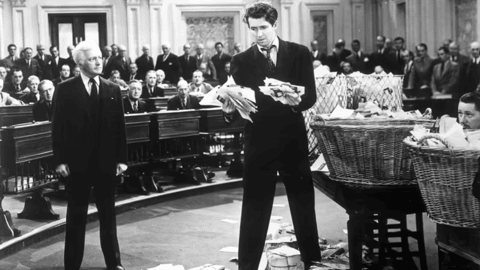
The contemporary Senate filibuster operates far differently than most Americans imagine. Popular culture—from Mr. Smith Goes to Washington to Strom Thurmond's 24-hour Civil Rights Act speech—depicts senators physically holding the floor through marathon speaking sessions. More recently, Senator Cory Booker broke Thurmond's record with a 25-hour speech against Trump policies in April 2025.
But these theatrical moments are exceptions to a system that has fundamentally changed. Since the early 1970s, Senate procedure has allowed "silent filibusters." No senator needs to maintain physical presence on the floor. Simply declaring intent to filibuster triggers the 60-vote threshold requirement for cloture—the formal process to end debate and proceed to a final vote.
This procedural evolution has transformed the filibuster from rare emergency brake to routine legislative obstacle. The current shutdown illustrates the problem perfectly: Thune's continuing resolution has majority support (53 votes) but remains blocked by Democratic refusal to provide the additional seven votes needed for cloture. No Senator Chuck Schumer speech. No physical exhaustion. Just procedural deadlock while millions of Americans suffer.
The Bureaucratic Accident That Created Two Centuries of Gridlock
The Senate filibuster has no constitutional basis. The Founding Fathers never intended for supermajority requirements to control routine legislation. Instead, the filibuster emerged from a procedural cleanup effort that went catastrophically wrong.
In 1806, Vice President Aaron Burr—the same man who killed Alexander Hamilton in their infamous duel—suggested the Senate streamline its overly complex rulebook. Among his recommendations: eliminate the "Previous Question Motion," a procedural tool that allowed simple majorities to end debate and force votes. The House retained this rule, which is why House majorities can pass legislation relatively quickly. The Senate deleted it.
For approximately 30 years, nothing dramatic changed. Senators voluntarily ended debates and proceeded to votes through informal consensus. But by the 1830s and 1840s, clever legislators realized what had happened: without any mechanism to force votes, determined minorities could simply continue speaking indefinitely. The term "filibuster" entered the legislative vocabulary, borrowed from the Dutch word for pirate—an apt description for hijacking the legislative process.
For 110 years, the filibuster was truly unlimited. Determined senators could talk as long as physical endurance allowed, with no procedural remedy available to the majority beyond waiting them out or negotiating surrender.

This changed during World War I, when a group of 11 anti-war senators filibustered President Woodrow Wilson's bill to arm merchant ships against German U-boats. Led by Wisconsin Senator Robert LaFollette, the group talked until the Senate session expired without a vote. Wilson's furious response mobilized public opinion: "A little group of willful men, representing no opinion but their own, have rendered the great government of the United States helpless and contemptible."
Public backlash was severe enough—including senators burned in effigy—that the Senate passed Rule 22 on March 8, 1917, creating the cloture process. Originally requiring two-thirds supermajority (67 votes), the threshold was lowered to 60 votes in 1975.
The Nuclear Option: How Democrats Started This and Republicans Followed
Both parties have chipped away at the filibuster over the years, but Democrats started the nuclear option trend and Republicans followed their playbook.
In 2013, Senate Majority Leader Harry Reid and the Democrats eliminated the filibuster for most executive branch nominees and federal judges below the Supreme Court level. Why? They were frustrated that Republicans were blocking Obama's nominees.
Reid went nuclear with a simple majority vote. At the time, Mitch McConnell warned them: "You'll regret this."
And guess what? Four years later, when Republicans had the majority and Trump was president, McConnell extended Reid's rule change to include Supreme Court nominees. That's how we got Neil Gorsuch, Brett Kavanaugh, and Amy Coney Barrett on the court without needing 60 votes.
Then in September of this year, John Thune used the nuclear option again—this time to confirm 48 Trump nominees in a single vote, bypassing the normal process.
Democrats cried foul, but Thune was just using the playbook Democrats created.
The Hypocrisy Is Absolutely Rich

Remember when Biden was in office and Democrats controlled the Senate? They wanted to kill the filibuster for legislation—not just nominees, but actual laws. They wanted to eliminate it to pass:
- Nationwide abortion protections
- Voting rights legislation
- The Green New Deal
Kamala Harris said she supported eliminating the filibuster to pass abortion laws nationwide. Senators like Elizabeth Warren and Bernie Sanders screamed that the filibuster was a "Jim Crow relic" that had to go.
The only Democrats who stopped them were Joe Manchin and Kyrsten Sinema, who refused to support killing the legislative filibuster.
And now? Now that Republicans have the majority, suddenly Democrats love the filibuster. It's "essential to democracy." It's "a crucial check on power." It "protects minority rights."
Senator John Fetterman from Pennsylvania actually called out his own party on this hypocrisy. He said: "We ran on killing the filibuster and now we love it. I don't want to hear any Democrat clutching their pearls about the filibuster."
At least Fetterman's honest about it. And he actually said he'd support Republicans using the nuclear option to end the shutdown because his constituents need to eat and SNAP benefits are too important.
Trump's Call to Action: The Truth Social Ultimatum
Last week, Trump returned from his Asia trip and issued his call to action on Truth Social:
"It is now time for the Republicans to play their Trump card and go for what is called the nuclear option. Get rid of the filibuster and get rid of it now."
He continued on Saturday: "Terminate the filibuster, not just for the shutdown, but for everything else. We will get all of our common sense policies approved, voter ID anyone, and make America great again. Remember, the Democrats will do it immediately, as soon as they get the chance. Our doing it will not give them that chance."
Trump's argument is straightforward: Democrats wanted to do this when they had power. They only failed because Manchin and Sinema stopped them. The next time Democrats have the White House and 51 Senate votes, they will kill the filibuster.
So Republicans should do it now while they have the chance.
And you know what? He's probably right about Democratic intentions.
But Senate Republicans said no. Immediately. Firmly.
John Thune's spokesman said his position on the filibuster is unchanged. Senator John Curtis from Utah tweeted: "The filibuster forces us to find common ground in the Senate. Power changes hands, but principles shouldn't."
Senator Tom Tillis from North Carolina even said he would resign if Republicans voted to eliminate the filibuster.
House Speaker Mike Johnson called it "a very important safeguard" and said Trump's comments were "an expression of the president's anger at the situation."
Some House Republicans backed Trump—Byron Donalds wrote a letter to Thune calling for the nuclear option, and Marjorie Taylor Greene and Anna Paulina Luna supported it. Mark Levin suggested Republicans consider suspending or eliminating the filibuster for routine budget bills.
But Senate Republicans—the ones who would actually have to vote for it—are holding the line.
What Should Republicans Actually Do?
Let me be crystal clear about something: I understand Trump's frustration. I get it completely.
We have 53 Senate seats. We have the House. We have the White House. We should be able to reopen the government and fund it through November 21st.
But Chuck Schumer and Senate Democrats are holding 42 million Americans' food assistance hostage because they want to extend Obamacare subsidies that prop up illegal alien healthcare.
It's infuriating. It's un-American. And I completely understand why Trump wants to blow up the filibuster to end this nightmare.
But—and this is important—I think Senate Republicans are making the right call by not going nuclear.
Here's why.
1. Think About When Democrats Inevitably Take Back the Senate
And they will, eventually. That's how our system works.
If we eliminate the filibuster now, Democrats will have zero obstacles when they're back in power:
- DC statehood? Done.
- Puerto Rico statehood? Done.
- Packing the Supreme Court with six more justices? Done.
- The Green New Deal? Done.
- Nationwide gun confiscation? Done.
- Abolishing the Electoral College? They'll try.
Everything conservatives have fought for could be wiped out in a single two-year session of Congress with 51 votes.
2. Republicans Have Another Tool: Budget Reconciliation
This is a process that already allows certain budget-related bills to pass with just 51 votes. Republicans used it to pass Trump's tax cuts in his first term. It has limitations, but it's there and it's available.
3. Bring Back the Talking Filibuster
This is the most important point.
Remember, the current system is a silent filibuster—a senator just threatens it and boom, you need 60 votes.
But what if we changed the rule back to how it used to work? What if we said: You want a filibuster? Fine. But you have to actually hold the floor. You have to stand there and talk for as long as you can. No breaks. No sitting down. Keep talking or the bill moves forward.
This would change everything.
Right now, Chuck Schumer and Senate Democrats can block the government from reopening without any political cost. They don't have to do anything.
But imagine if we changed the rules so Schumer himself had to stand on the Senate floor for 24, 48, 72 hours explaining to the American people why he's blocking food assistance for 42 million Americans so illegal aliens can keep getting subsidized healthcare.
Do you think he'd do it?
Do you think he'd stand there on C-SPAN for three days straight while American families can't feed their kids, while air traffic controllers work without pay, while federal employees go without paychecks—all because he wants to extend Obamacare subsidies?
I don't think so. And if he did try it, the political cost would be enormous.
Americans would see exactly who's responsible for the shutdown. The talking filibuster would restore accountability. It would make obstruction visible instead of invisible. It would force senators to actually defend their positions publicly instead of hiding behind procedural threats.
The Bottom Line: Principles Matter More Than Short-Term Wins
The filibuster is complicated. It's not in the Constitution. It was created by accident. It's been used to block both terrible things and good things throughout our history. It's been abused by both parties.
But I think it serves an important purpose. It forces the majority party to work with the minority. It prevents wild swings in policy every time control of Washington changes hands.
It's messy and frustrating, but it's part of what makes the Senate different from the House. The Senate is supposed to be the "cooling saucer," not the boiling pot.
Trump is right that Democrats are hypocrites. He's right that they'll probably try to kill the filibuster the next time they have power.
But two wrongs don't make a right. Republicans shouldn't abandon a principle just because Democrats might abandon it later.
Instead, Republicans should:
- Keep using reconciliation where possible
- Reform the filibuster to require actual talking, bringing back accountability
- Keep the pressure on Democrats to explain why they're holding the country hostage
- Force vote after vote after vote, making Democrats defend their obstruction
And here's my prediction: The shutdown will end this week, whether through negotiations or through Democrats finally cracking under political pressure.
When it does, the filibuster will still be intact.
But the fight over the filibuster? That fight is just getting started.
Thanks for reading, Patriots. If you want to support the show, head over to OConnorsRightStand.com and follow me on X @OConnorPodcasts for updates throughout the week. Stay strong out there.

Trump's Historic Pharmaceutical Victory: 14 Companies Slash Drug Prices While Insurance Giants Face Reckoning