The January 6th Pipe Bomber: Four Years, No Arrest, and Questions the FBI Won't Answer
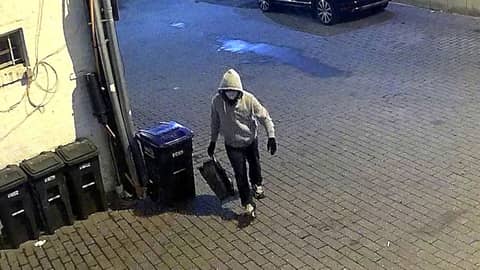
On January 5th and 6th, 2021, someone planted two functional pipe bombs in Washington D.C.—one at the Democratic National Committee headquarters, one at the Republican National Committee. The FBI says these devices could have killed people.
Four years later, despite more surveillance footage than virtually any crime scene in American history, despite tracking the suspect to a specific house in Northern Virginia, despite identifying the exact shoes worn (only 25,000 pairs sold), the FBI claims they still can't identify who did it.
But here's what should bother every American: the FBI has arrested over 1,500 January 6th defendants using facial recognition, social media posts, and hotel records. They tracked down people who simply walked through open Capitol doors and took selfies.
Yet the person who planted actual explosives within feet of where Vice President-elect Kamala Harris would be sitting just hours later? Still a mystery.
Either the FBI is incompetent at a level that defies belief, or they're not really trying to solve this case. I work in software—I solve problems for a living. And when you can't solve a problem, it comes down to one of three things: you don't have the information you need, you're approaching it wrong, or you're not actually trying to solve it.
The FBI has all the information. They know exactly how to solve cases like this. Which leaves only one conclusion.
Let me show you why this case doesn't add up, what the FBI's own agents are saying publicly, and why we might finally get answers now that new leadership has taken over.
The Basic Facts: What Actually Happened
Before we get into theories, let's establish the verified timeline with no speculation:
January 5th, 2021 - Evening Someone dressed in a gray hooded sweatshirt, face mask, black gloves, and Nike Air Max Speed Turf shoes (distinctive yellow logo) walks through Capitol Hill carrying a backpack.
- 7:54 PM: Plants a pipe bomb outside DNC headquarters
- 8:16 PM: Plants a second bomb outside RNC headquarters (22 minutes later)
Both devices were 8-inch galvanized pipes with threaded caps, filled with homemade black powder (potassium nitrate, sulfur, and charcoal). Each had a 60-minute kitchen timer attached.
January 6th, 2021 - Morning and Afternoon
- 11:30 AM: Vice President-elect Kamala Harris arrives at DNC headquarters for meetings
- Secret Service conducts standard security sweep with two K-9 bomb-sniffing units
- Harris's motorcade parks within yards of the pipe bomb
- ~1:00 PM: Both bombs are discovered, approximately 17 hours after being planted
Here's where it gets strange: these bombs had 60-minute timers. If planted at 8:00 PM, they should have detonated at 9:00 PM on January 5th. But they didn't explode.
When discovered 17 hours later, witnesses reported one timer still showed 20 minutes remaining.
Either the timers malfunctioned, the batteries died, or something about the official FBI timeline doesn't match reality.
The Kamala Harris Factor: Secret Service Failure or Something Else?
This detail should alarm everyone regardless of political affiliation: the sitting Vice President-elect was inside a building with an active pipe bomb sitting 20 feet away for nearly two hours.
The Secret Service conducted their standard security sweep before Harris arrived at 11:30 AM. This included:
- Two K-9 bomb-sniffing units
- Multiple agents checking the perimeter
- Standard protective protocols for someone at that level
They all missed a pipe bomb sitting on a bench in plain view.
According to a House Oversight Committee report from January 2025, more than 10 Secret Service agents and two canine teams came within feet of that pipe bomb and never detected it.
After 9/11, America spent billions training K-9 units to detect explosives. These aren't amateur dogs—they're among the best-trained bomb-sniffing animals in the world, working for the agency tasked with protecting our nation's leaders.
How do professional bomb-sniffing dogs walk within feet of an actual pipe bomb and not alert?
That's not a rhetorical question. That's a fundamental failure that demands explanation.
What the FBI Says They've Done (And Why It Doesn't Add Up)
According to the FBI, they've conducted an exhaustive investigation:
- Over 1,000 interviews conducted
- 39,000 video files reviewed
- More than 600 tips from the public assessed
- Identified the specific Nike shoes (Air Max Speed Turf with yellow logo)
- Tracked down that only 25,000 pairs were sold between August 2018-January 2021
- Determined suspect is approximately 5'7" tall
- Issued geofence warrants for cell phone data
- Analyzed cell tower information
- Conducted forensic analysis on the devices themselves
That sounds comprehensive. Except for one problem: they tracked the suspect to a specific house in Northern Virginia and then stopped.
The Kyle Seraphin Revelation
Former FBI agent Kyle Seraphin was on the surveillance team assigned to this case. He's gone public with information that contradicts the FBI's narrative of an unsolvable mystery.
According to Seraphin, the FBI:
- Traced the suspect into a Metro station
- Identified the specific fare card used
- Followed that fare card to determine where the person exited
- Used surveillance cameras to track them to a specific house in Northern Virginia
- Assigned surveillance teams to stake out that house
Seraphin and his team watched that house for days, waiting for the right moment to interview the person of interest.
Then they were pulled off the case. No interview conducted. Team reassigned to follow up on low-priority January 6th leads—essentially tracking down people who were just standing around outside the Capitol.
In Seraphin's own words: the FBI was "one door away from the pipe bomber within days of January 6th and was deliberately pulled away for no logical investigative reason."
Why would you pull a surveillance team off a promising lead in a pipe bomb case where the Vice President-elect was nearly killed?
The Corrupted Data Excuse That Doesn't Hold Up
Former FBI official Steve D'Antuono—Assistant Director in charge of the FBI's Washington Field Office until late 2024—testified to Congress about this case. His explanation for why they couldn't identify the suspect through cell phone data?
Corrupted data from a major cell carrier.
"We did a complete geofence. We have complete data—not complete, because there's some data that was corrupted by one of the providers, not purposely by them."
Surveillance footage clearly shows the suspect using a cell phone. But the FBI claims they can't identify the person because data from one carrier was corrupted.
Here's the problem: the House Oversight Committee followed up with all major cell carriers, and every single one said the same thing:
"We never provided corrupted data to the FBI, and the FBI never told us there were any problems with the data we provided."
So who's lying—the FBI or the cell phone companies?
This isn't a minor discrepancy. The FBI's entire explanation for why they can't solve this case hinges on bad data from cell carriers. The cell carriers say that's false.
Both statements cannot be true.
The Blaze Investigation: Former Capitol Police Officer Now at CIA?
On November 8th, The Blaze published an investigation that sent shockwaves through conservative media. They claimed to have identified the pipe bomber using forensic gait analysis software—technology that analyzes the unique way someone walks.
According to their analysis, they got a 94-98% match to a specific person: a former Capitol Police officer who left the force shortly after January 6th and went to work for the CIA.
The article included her name and photographs. Conservative journalist Steve Baker (a former January 6th defendant later pardoned by Trump) called it "the biggest scandal and conspiracy in American history."
Multiple Republican congressmen promoted the story:
- Rep. Barry Loudermilk (who chairs the House subcommittee investigating J6) posted about it
- Rep. Thomas Massie wrote that "Capitol Police turned CIA orchestrated the pipe bombs on January 6th, and the FBI has covered it up for over four years"
The story went viral—millions of views across conservative media.
The FBI's Response and The Daily Wire Follow-Up
Six days later, on November 14th, the FBI sent a letter to Rep. Loudermilk explaining their version of events.
They said they'd been investigating a different person of interest—someone who took photographs near the RNC on January 5th, then took the Metro back to a friend's house in Northern Virginia using that friend's fare card.
The FBI claimed they focused on that house because of the Metro card connection—not because of the Capitol Police officer who happened to live next door.
The Daily Wire then tracked down the Air Force veteran who owns that house and whose Metro card was used. He confirmed his friend borrowed the card that day—but it wasn't the Capitol Police officer next door.
Does this completely debunk The Blaze's theory? Not necessarily. The gait analysis evidence still exists. But it removes a key piece of circumstantial evidence about proximity to the FBI's surveillance location.
What we're left with is gait analysis—which experts will tell you isn't like fingerprints or DNA. It can be part of a case, but it's not standalone proof.
Dan Bongino: From Podcast Host Calling It an Inside Job to FBI Deputy Director
This might be the most interesting subplot in the entire saga.
For years, Dan Bongino—former Secret Service agent and hugely popular conservative podcast host—has been saying the pipe bombs were an inside job. He's suggested they were:
- Training devices planted by law enforcement to test security
- An FBI operation with doctored surveillance footage
- An effort to frame MAGA supporters
- An attempt to create a narrative that Trump supporters tried to assassinate Kamala Harris
"Folks, this guy was an insider," Bongino said on his show. "This was an inside job, and it is the biggest scandal in FBI history."
That was Dan Bongino the podcast host.
Now Dan Bongino is FBI Deputy Director—literally the number two person at the FBI, helping oversee this very investigation.
And just this past Sunday, FBI Director Kash Patel went on Fox News and said about the pipe bomber case: "I think you'll see something on that front VERY soon...we can't reveal our ongoing investigations."
Something's coming.
The Diversion Theory: Bombs That Were Never Meant to Explode
One of the most compelling theories explains both the timing and the malfunction: these bombs were never meant to explode. They were planted as a diversion.
Consider the timeline:
- Bombs discovered: ~1:00 PM on January 6th
- Capitol breach begins: ~1:00 PM on January 6th
- Protesters breach outer perimeter: ~1:00 PM
- Police lines get overwhelmed: ~1:00 PM
Then suddenly—pipe bombs discovered at both party headquarters.
What happens next?
- Bomb squads diverted from the Capitol
- Tactical teams respond to DNC and RNC
- K-9 units pulled from Capitol security
- Resources that would have been protecting Congress are now a quarter-mile away
Rep. Barry Loudermilk, who has done extensive investigation on this, puts it bluntly:
"The single greatest action that facilitated the protesters' ease of entry into the Capitol on January 6th was the placing of the pipe bombs, and the diversionary effect that had on security resources which would have otherwise been at the Capitol."
Think about it strategically: if you wanted to make it easier for protesters to breach the Capitol, what would you do?
You'd create an emergency somewhere else that pulls security resources away from your target.
And if that was your plan, would you want the bombs to actually explode the night before? No. You'd want them discovered on January 6th, right when you need the diversion to work.
This theory explains:
- Why the timers didn't function as expected
- Why they were planted the night before but discovered during the breach
- Why they were placed at locations that would draw maximum security response
- Why the suspect was so careful about not being identified
I'm not saying this theory is proven. But it explains far more than the FBI's official "we can't figure it out" position.
The Evidence the FBI Won't Release
Capitol Hill is one of the most heavily surveilled locations in America. Security cameras everywhere—government cameras, traffic cameras, private building cameras. The FBI has access to all of it.
They've released some footage: grainy clips showing the suspect walking through an alley, sitting on a bench near where the DNC bomb was planted.
But experts have pointed out something suspicious: the FBI released footage at 1 frame per second.
Normal security camera footage runs at 15 frames per second or higher. When you artificially reduce it to 1 frame per second, you lose massive amounts of detail. You can't properly analyze movements. You can't see fine details of what someone's doing.
Why would the FBI deliberately reduce the frame rate before releasing it to the public?
And here's the bigger question: they've shown us footage of the suspect NEAR where the bombs were placed. But they haven't released footage of the actual planting of either bomb.
There have to be cameras that captured that. So where's that footage?
The pattern is consistent:
- Video of suspect using a cell phone (but can't identify them due to "corrupted data")
- Tracked suspect to Metro station and identified fare card (but won't show that evidence)
- Surveilled specific house in Northern Virginia (but pulled teams before interviewing anyone)
Every time you ask "what about this evidence?" the answer is either:
- "We can't release that"
- "That data was corrupted"
- "We're still investigating"
After four years.
Selective Prosecution: Why This Case Matters
Here's what should make this obvious something is wrong:
The FBI has arrested over 1,500 people connected to January 6th using:
- Facial recognition software
- Social media posts
- Hotel records
- Cell phone data
- Credit card transactions
- Geofence warrants
They tracked down people who walked through open doors and took selfies. People who were just standing around outside. People whose only "crime" was being present.
But the person who planted two functional pipe bombs in one of the most surveilled locations in America, wearing distinctive shoes that only 25,000 pairs were sold, carrying identifiable backpacks, and leaving behind pristine non-detonated devices?
Still a mystery after four years.
That's not incompetence. That's a choice.
The FBI tracked down the 1993 World Trade Center bombers by finding a partial VIN number under four stories of rubble. They caught the Unabomber after 17 years when his brother recognized his writing style from a manifesto.
But they can't find someone they tracked to a specific house in Northern Virginia using Metro card data and surveillance footage?
The capabilities don't match the results. Which means the results are the goal, not the failure.
Why We Might Finally Get Answers
When Kash Patel became FBI Director, one of his first moves was turning over documents that Christopher Wray's FBI had refused to provide Congress for years.
In March 2025: Patel handed over what congressional aides described as a "truckload" of documents related to:
- The pipe bombs
- Targeting of Catholic churches
- Surveillance of parents at school board meetings
In September 2025: He released the FBI's lab report on the pipe bombs—the one showing they had "destructive potential" but carefully avoiding calling them "viable devices."
He's released witness statements that contradict the official timeline. He's been transparent in ways the previous FBI leadership absolutely refused to be.
And now you have Dan Bongino as Deputy Director—a man who spent years on his podcast calling this an inside job.
When Patel says "you'll see something on that front VERY soon," I believe him.
What This Case Is Really About
The pipe bomber story isn't just about two bombs that didn't explode. It's about three bigger issues:
Selective Justice: An FBI that prosecuted January 6th protesters with ruthless efficiency while letting the person who planted actual explosives remain free.
Evidence Manipulation: Footage released at artificially low frame rates, "corrupted" data that cell carriers say they never provided, critical evidence that keeps disappearing or being explained away.
Unanswered Questions: Why were Secret Service dogs unable to detect the bomb? Why were surveillance teams pulled off a promising lead? Why hasn't the FBI released footage of the actual bomb placement?
Four years later, we still don't have arrests. We still don't have answers.
But we're finally getting new information, new transparency, and FBI leadership that seems willing to actually solve this case instead of burying it.
The question is: what will that solution reveal about January 6th that the previous FBI leadership didn't want us to know?
Stay informed with unfiltered conservative analysis. Listen to O'Connor's Right Stand podcast every Tuesday and Thursday for in-depth political commentary, or catch Quick Strike episodes Monday, Wednesday, and Friday. Follow on X: @OConnorPodcasts | Visit: OConnorsRightStand.com & OConnors Quick Strike
Keywords: January 6 pipe bomber, FBI investigation failures, Kash Patel, Dan Bongino FBI, Capitol Hill pipe bombs, Secret Service failure, Kyle Seraphin testimony, J6 investigation, unsolved terrorism case, selective prosecution

Trump's Historic Pharmaceutical Victory: 14 Companies Slash Drug Prices While Insurance Giants Face Reckoning