The Blue Slip Senate Tradition: How a Jim Crow Relic Is Blocking Trump's Justice Department
The Blue Slip Senate Tradition: How a Jim Crow Relic Is Blocking Trump's Justice Department
Analysis from O'Connor's Right Stand
President Trump controls the White House. Republicans control the Senate with 53 seats. Yet somehow, Trump cannot appoint federal prosecutors or judges in the states that need them most—New York, California, New Jersey, Illinois, and Virginia. The reason? A piece of blue paper and two Republican senators who refuse to eliminate an obstruction tool created by segregationists.
Just days ago, Alina Habba resigned as U.S. Attorney for New Jersey. Not because she did anything wrong, but because Democrat Senators Cory Booker and Andy Kim used something called a "blue slip" to kill her nomination before it could even get a hearing. Trump has seven U.S. Attorneys facing the same fate, blocked by a Senate tradition that wasn't designed to protect home state input—it was weaponized in 1956 by a notorious segregationist to stop federal judges from enforcing school integration.
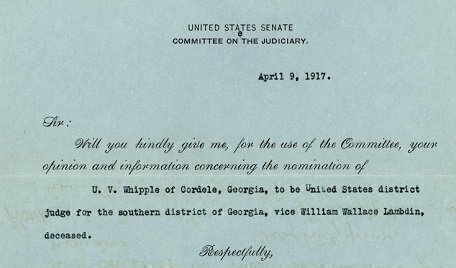
The blue slip isn't law. It's not in the Constitution. It's a 1917 courtesy that became a Jim Crow veto. And today, Republican Senators Chuck Grassley and John Thune are defending it as "vital Senate tradition" while Democrats use it to paralyze the Justice Department in America's most crime-ridden cities.
What Exactly Is the Blue Slip?
The mechanics are deceptively simple. When the President nominates someone for a federal district judgeship or U.S. Attorney position, the Senate Judiciary Committee sends a literal piece of blue paper to both home-state senators. Those senators can return it with a positive recommendation, negative recommendation, or simply refuse to return it at all.
Here's the critical detail most Americans don't understand: this process exists nowhere in the Constitution's appointments clause. Article II, Section 2 gives the President power to nominate federal officers "by and with the advice and consent of the Senate"—meaning the Senate as a body, not individual senators acting as kings in their own states.
For the first four decades after Senator Charles Culberson of Texas introduced this courtesy in 1917, a negative blue slip was merely advisory. The Judiciary Committee could still hold hearings, conduct votes, and move nominations forward. The full Senate maintained its constitutional authority to provide advice and consent. But that all changed when a Mississippi segregationist took control of the Judiciary Committee.
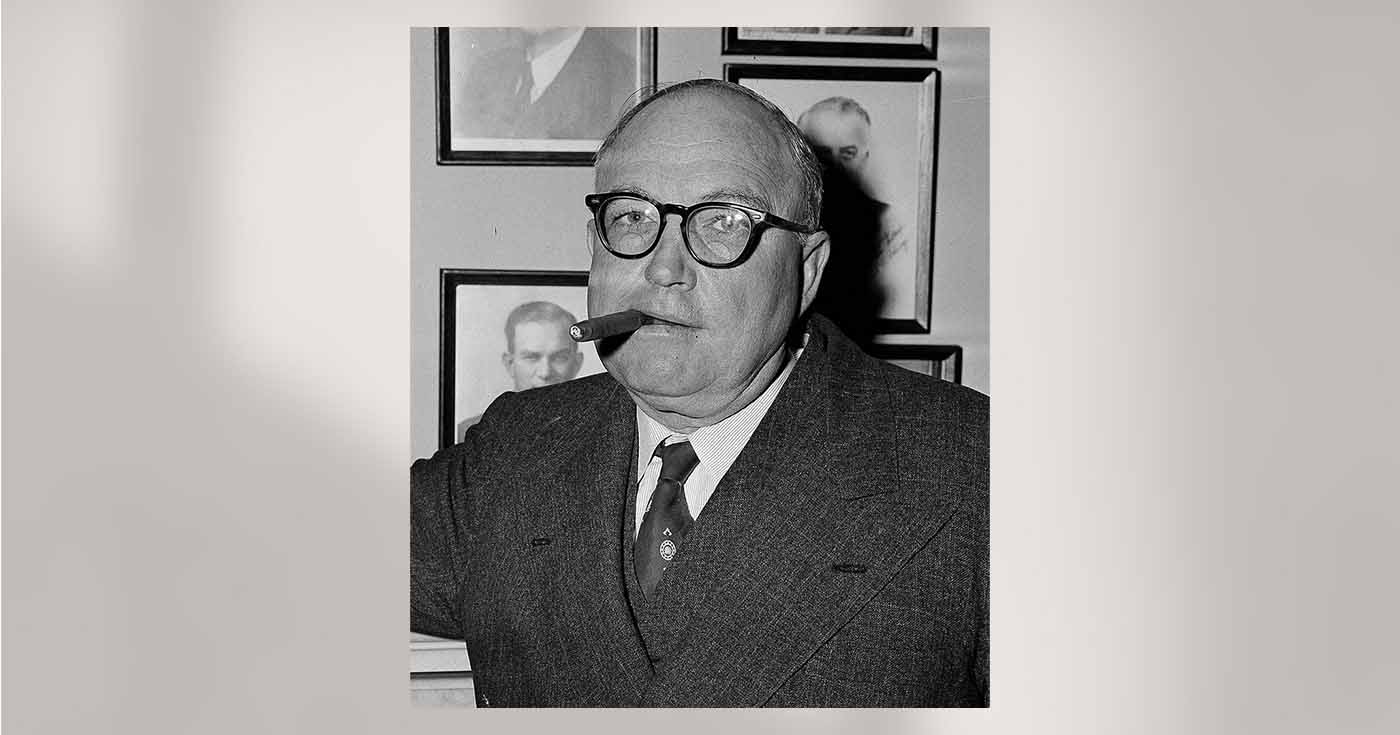
James Eastland's Segregationist Power Grab
James Eastland represented everything ugly about Jim Crow politics. As a U.S. Senator from Mississippi and wealthy plantation owner in Sunflower County, Eastland openly preached the inferiority of African Americans and called segregation "the law of nature and the law of God." When the Supreme Court handed down Brown v. Board of Education in 1954, declaring school segregation unconstitutional, Eastland condemned it as "the greatest crime in the history of the nation."
Two years later, Eastland became chairman of the Senate Judiciary Committee. He immediately understood the threat federal judges posed to his white supremacist worldview. District court judges across the South would be tasked with enforcing school desegregation orders. Integration would move from Supreme Court principle to classroom reality. Eastland needed a mechanism to stop it.
The blue slip gave him that weapon. Under Eastland's new interpretation, if either home-state senator withheld their blue slip, the nomination died instantly. No hearing. No committee vote. No floor debate. Just silence and death. As Villanova law professor Tuan Samahon documented, "Eastland endowed the blue slip with veto power to, among other things, keep Mississippi's federal judicial bench free of sympathizers with Brown v. Board of Education."
For 22 years—from 1956 until his retirement in 1978—Eastland wielded this veto to ensure southern federal courts remained dominated by judges who slow-walked integration or openly defied it. The blue slip became one of the most effective tools of racial oppression in American history, blocking dozens of qualified nominees whose only disqualifying trait was supporting equal rights under law.
Democrats Weaponize the Segregationist Playbook
Flash forward to April 2025. Senate Minority Leader Chuck Schumer announced he would withhold blue slips for Trump's U.S. Attorney nominees in New York: Jay Clayton for the Southern District and Joseph Nosella for the Eastern District. These positions represent two of the most powerful prosecutorial offices in America, handling everything from Wall Street fraud and terrorism cases to organized crime and immigration violations at JFK Airport.
Schumer's stated reason? He claimed Trump "intends to use the Justice Department as weapons to go after his perceived enemies" and called Trump's motivations "deeply corrosive to the rule of law." Translation: Schumer fears Trump will actually prosecute criminals in New York, and he's using a Jim Crow relic to prevent it.
The pattern repeated in New Jersey. Democrat Senators Cory Booker and Andy Kim blocked Alina Habba's nomination without even meeting with her. She had served as interim U.S. Attorney since March, but when her 120-day term expired in July, federal courts refused to extend it without Senate confirmation—which she couldn't obtain because Booker and Kim simply wouldn't return their blue slips. The Third Circuit Court of Appeals ultimately ruled that Justice Department workarounds to keep her in position were unlawful. On Monday, Habba resigned.
At a White House roundtable following her resignation, Trump expressed his frustration bluntly: "We have about seven U.S. Attorneys who are not going to be able to keep their jobs much longer because of the blue slip. I can't appoint a U.S. Attorney that's not a Democrat because they put a block on it. If I put up George Washington and Abraham Lincoln to be U.S. Attorney in New Jersey, they will put a hold on it."
The President's anger focused squarely on Senate Republicans: "It's a shame. And the Republicans should be ashamed of themselves that they allow this to go on."

Grassley and Thune Choose "Tradition" Over Governing
Chuck Grassley, 91-year-old chairman of the Senate Judiciary Committee and senator since 1981, has the authority to eliminate the blue slip requirement for district judges and U.S. Attorneys. He's already done it for circuit court nominees—back in 2017, Grassley advanced nominees like David Stras to the Eighth Circuit and Kyle Duncan to the Fifth Circuit despite home-state senators withholding blue slips.
Yet Grassley refuses to extend that same principle to district-level positions. When Trump publicly called on him to act in July, posting that Grassley "could solve the blue slip problem with a mere flick of the pen," Grassley responded with wounded dignity: "I was offended by what the President said and I'm disappointed that it would result in personal insults."
Senate Majority Leader John Thune backs Grassley's position, claiming "both parties have honored it historically" and expressing no interest in eliminating the tradition. But Thune's claim doesn't survive basic scrutiny. When Democrat Chairman Dick Durbin advanced Andre Mathis to the Sixth Circuit in 2022, he did so despite Tennessee Republicans withholding blue slips. Democrats abandoned the tradition when it suited them. Grassley himself abandoned it for circuit courts. Rules apparently change depending on who holds power and which positions are at stake.
Senator Tom Tillis articulated the standard Republican anxiety: eliminating blue slips would "pave the path for Democrats to ram through extremist liberal judges in red states" when they retake power. But this assumes Democrats will honor blue slips when they control everything—an assumption contradicted by Democrats' actual behavior. They nuked the filibuster for judges in 2013, attempted to pack the Supreme Court, and routinely break Senate norms when convenient. The question isn't whether Democrats will eliminate blue slips next time—it's why Republicans refuse to eliminate them while they still can.
The Constitutional Case Against Blue Slips
Trump has hinted at a constitutional challenge to the blue slip tradition. The legal argument is straightforward: Article II, Section 2 grants the President authority to nominate federal officers "by and with the advice and consent of the Senate." The Constitution gives the Senate as an institution the power to provide advice and consent—not individual senators acting as sovereigns with unilateral veto authority.
Allowing a single senator to kill a presidential nomination arguably violates the separation of powers and the President's constitutional prerogatives. While the Senate may establish internal procedures under Article I, those procedures cannot nullify another branch's explicit constitutional powers. Trump suggested in August that he might sue over this issue.
Legal scholars disagree on whether such a challenge would succeed. Some argue the Senate's constitutional authority to determine its own rules includes establishing blue slip procedures. Others contend that internal Senate procedures cannot override the President's nomination power or transform the Senate's collective consent role into individual senator vetoes.
What's not debatable is this: the blue slip exists nowhere in the Constitution. It's custom, not law. Customs can change. They have changed repeatedly throughout Senate history.
The Real-World Cost: Crime, Chaos, and Paralyzed Justice
Trump's reference to "about seven U.S. Attorneys" in jeopardy barely scratches the surface of the problem. Beyond New York and New Jersey, Democrat senators are using blue slips to block nominations in California, Illinois, and Virginia—states where progressive district attorneys already refuse to prosecute property crimes, assault, and even organized retail theft.
U.S. Attorneys serve as the last line of defense in these jurisdictions. They prosecute federal crimes when state prosecutors won't. They target gang violence, organized crime, terrorism, and public corruption. They bring federal resources to bear on problems local authorities either can't or won't address. When U.S. Attorney positions sit vacant or filled by unconfirmed acting attorneys, the entire justice system suffers.
Defense attorneys challenge the authority of unconfirmed U.S. Attorneys to bring indictments. Courts must rule on whether prosecutions are valid. Trials get delayed. Sentences get postponed. Criminals exploit the chaos. Justice delayed becomes justice denied, and Americans pay the price while Senate Republicans protect a "tradition" that Democrats abandoned years ago.
The Path Forward: Eliminating the Blue Slip
The solution is simple. Grassley can eliminate the blue slip requirement for district judges and U.S. Attorneys with a single committee rule change. He's already demonstrated the authority by doing it for circuit court nominees. John Thune can support that change and ensure nominations receive timely floor votes.
Republicans control 53 Senate seats. They have the votes. They have the constitutional authority. They have a President demanding action. What they lack is political will.
This isn't about Senate procedure or abstract principles of federalism. It's about whether Trump can actually govern with the mandate voters gave him. If he cannot appoint prosecutors in the states with the worst crime and most corruption, if Democrat senators can unilaterally block any nominee regardless of qualifications, then what exactly did Americans elect him to do?
The blue slip is not sacred. It's a Jim Crow relic that segregationists weaponized to preserve white supremacy in the federal judiciary. Its continued existence serves only to obstruct constitutional governance and paralyze the Justice Department when Democrats hold Senate seats in high-crime states.
Grassley and Thune need to eliminate it. Now.
What You Can Do
Call Chuck Grassley's office at 202-224-3744. Tell him you expect the blue slip eliminated for U.S. Attorneys and district judges. Make it clear that "tradition" matters less than governing effectively.
Call John Thune's office at 202-224-2321. Tell him Senate Republicans must help Trump, not obstruct him with procedures Democrats will abandon the moment they regain power.
If you're in Iowa or South Dakota, remind both senators that voters are watching and remembering. The 2026 midterms aren't far away. Americans elected Trump to fix the Justice Department and restore law and order. Senate Republicans can either help or get out of the way.
The blue slip is an obstacle to justice. It's time to eliminate it and let the President govern.
This analysis is based on the December 2025 episode of O'Connor's Right Stand. For more in-depth conservative commentary on politics, policy, and culture, subscribe to the podcast on your preferred platform or visit OConnorsRightStand.com.

Trump's Historic Pharmaceutical Victory: 14 Companies Slash Drug Prices While Insurance Giants Face Reckoning